Designed accessible short-term housing for smoother transitions
Designed accessible short-term housing for smoother transitions
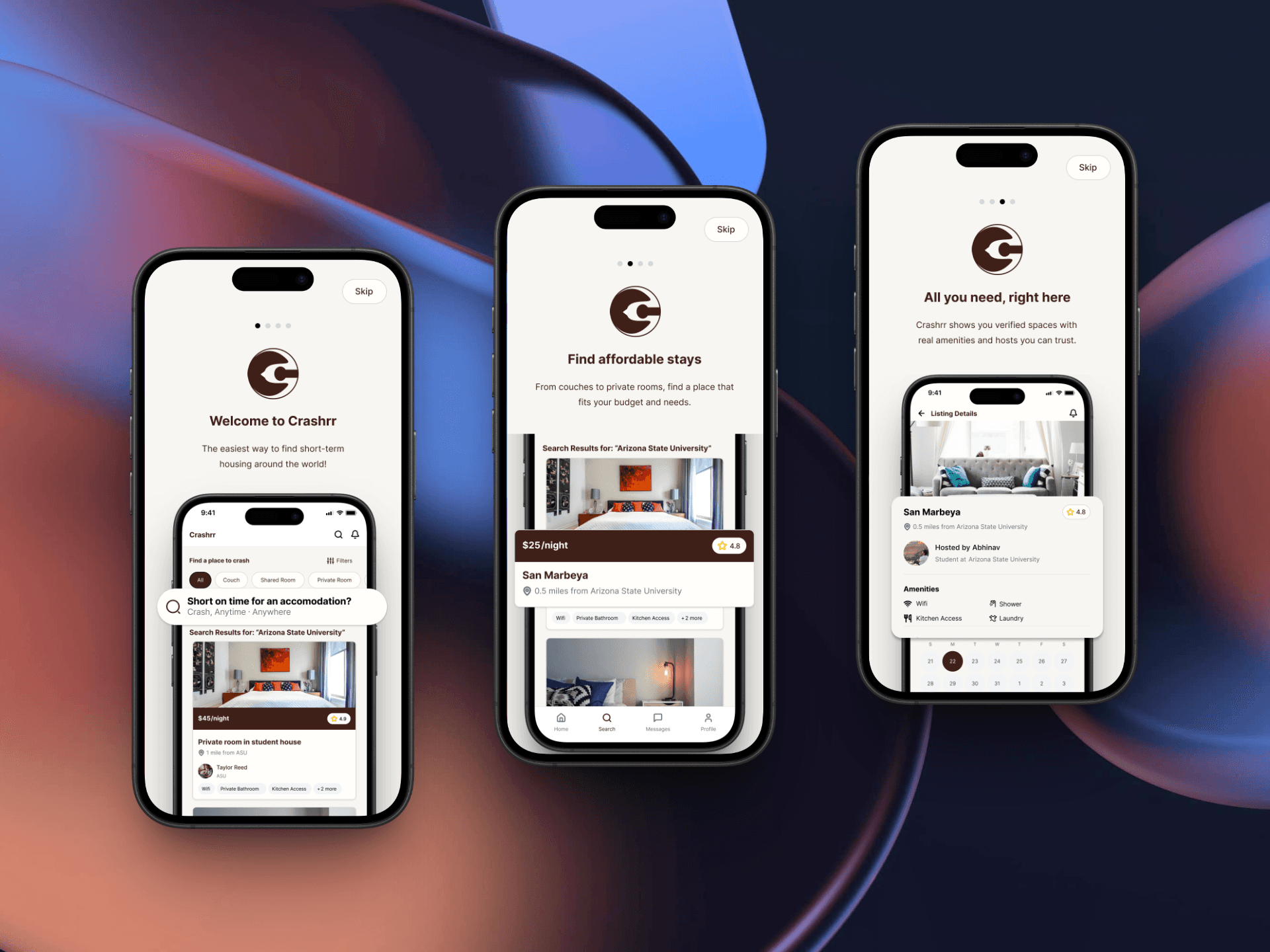
This MVP platform supports users relocating to new places by helping them find reliable short-term stays. I focused on crafting an inclusive, user-friendly experience that builds trust and eases the stress of temporary housing.
Boosted user approvals and engagement by 30% through reimagined onboarding and search flows.
Increased task completion by 25% via usability testing and user feedback.
Aligned design decisions with business goals for better activation and growth.
This MVP platform supports users relocating to new places by helping them find reliable short-term stays. I focused on crafting an inclusive, user-friendly experience that builds trust and eases the stress of temporary housing.
Boosted user approvals and engagement by 30% through reimagined onboarding and search flows.
Increased task completion by 25% via usability testing and user feedback.
Aligned design decisions with business goals for better activation and growth.
ROLE
ROLE
Product Designer (Freelance)
Product Designer (Freelance)
Client
Client
Crashrr
Crashrr
Industry
Industry
Real Estate Tech
Real Estate Tech
Duration
Duration
Aug 2024 - Jan 2025
Aug 2024 - Jan 2025
GOAL
GOAL
Help users quickly find safe, short-term accommodations during emergency situations with minimal cognitive load and decision-making friction.
Help users quickly find safe, short-term accommodations during emergency situations with minimal cognitive load and decision-making friction.
Crashrr was designed to support people displaced by unexpected events by providing a fast, reliable way to discover temporary housing. The goal was to prioritize speed, clarity, and trust in moments of stress, enabling users to secure shelter without navigating complex booking flows.
Crashrr was designed to support people displaced by unexpected events by providing a fast, reliable way to discover temporary housing. The goal was to prioritize speed, clarity, and trust in moments of stress, enabling users to secure shelter without navigating complex booking flows.
RESPONSIBILITIES
RESPONSIBILITIES
User Research, Problem Framing, Wireframing, Interaction Design, Visual Design, Prototyping, Usability Testing, MVP Design for Validation
User Research, Problem Framing, Wireframing, Interaction Design, Visual Design, Prototyping, Usability Testing, MVP Design for Validation
Background Information
Background Information
The rise of temporary housing needs:
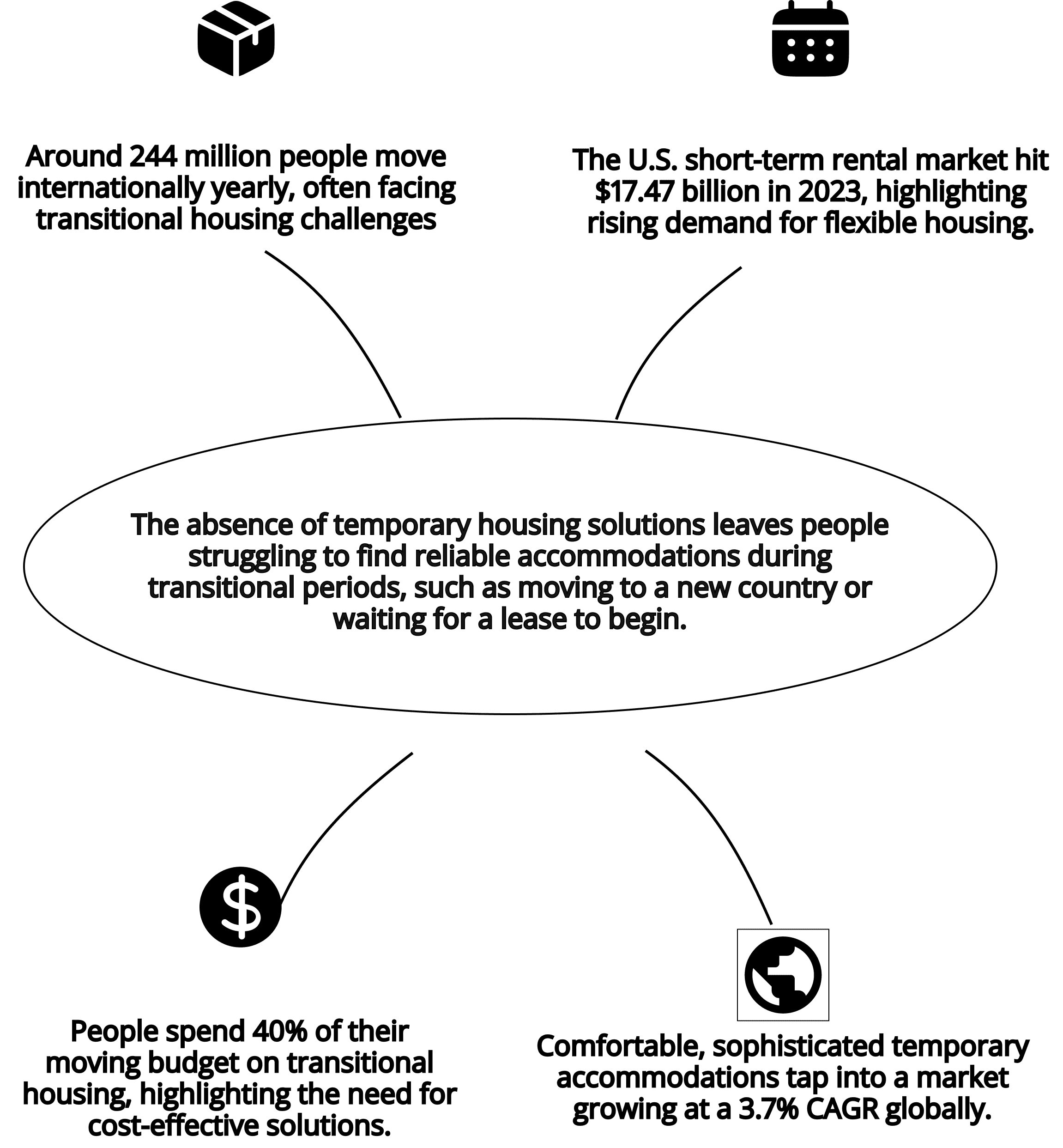
Extensive research highlights the need for innovative solutions to ease the financial and emotional burdens of these periods, while also showcasing the growing market potential for flexible and sophisticated accommodations. The diagram below outlines key insights supporting this demand.
The rise of temporary housing needs:
Extensive research highlights the need for innovative solutions to ease the financial and emotional burdens of these periods, while also showcasing the growing market potential for flexible and sophisticated accommodations. The diagram below outlines key insights supporting this demand.
My Biggest Questions
My Biggest Questions
HOW SHOULD I…
make hosting and staying in temporary accommodations more comfortable and personalized?
give users greater control over their transitional spaces?
HOW SHOULD I…
make hosting and staying in temporary accommodations more comfortable and personalized?
give users greater control over their transitional spaces?
Key Results
Key Results
Streamlined Onboarding
Streamlined Onboarding
Reduced time required for new users to find and book accommodations through an intuitive, guided onboarding process.
Reduced time required for new users to find and book accommodations through an intuitive, guided onboarding process.
Improved User Trust
Improved User Trust
Enhanced verification systems and profile transparency, leading to increased user confidence and higher engagement rates.
Enhanced verification systems and profile transparency, leading to increased user confidence and higher engagement rates.
Increased Platform Adoption
Increased Platform Adoption
Iterative updates based on user feedback contributed to higher engagement rates and growing user participation.
Iterative updates based on user feedback contributed to higher engagement rates and growing user participation.
Enhanced Booking Experience
Enhanced Booking Experience
Simplified the booking and confirmation process, aiming for a minimalistic approach
Simplified the booking and confirmation process, aiming for a minimalistic approach
Objectives
Objectives
Trust & Compatibility
Trust & Compatibility
Ensure hosts and crashers find suitable matches through clear profiles, verification processes, and communication tools.
Ensure hosts and crashers find suitable matches through clear profiles, verification processes, and communication tools.
Seamless Navigation
Seamless Navigation
Design an intuitive user journey that makes searching, booking, and hosting effortless, reducing friction in the decision-making process.
Design an intuitive user journey that makes searching, booking, and hosting effortless, reducing friction in the decision-making process.
Personalization
Personalization
Implement smart filters and preference-based recommendations to match users with the most compatible temporary stays.
Implement smart filters and preference-based recommendations to match users with the most compatible temporary stays.
Increased Platform Adoption
Increased Platform Adoption
Offer cost-effective, flexible accommodation solutions that cater to a diverse range of users with different budgets and needs.
Offer cost-effective, flexible accommodation solutions that cater to a diverse range of users with different budgets and needs.
Enhanced Booking Experience
Enhanced Booking Experience
Continuously enhance user experience through data-driven updates, incorporating feedback to refine Crashrr’s features and usability.
Continuously enhance user experience through data-driven updates, incorporating feedback to refine Crashrr’s features and usability.
Strategic Prioritization
Strategic Prioritization
Primary Research/ Understanding the problem:
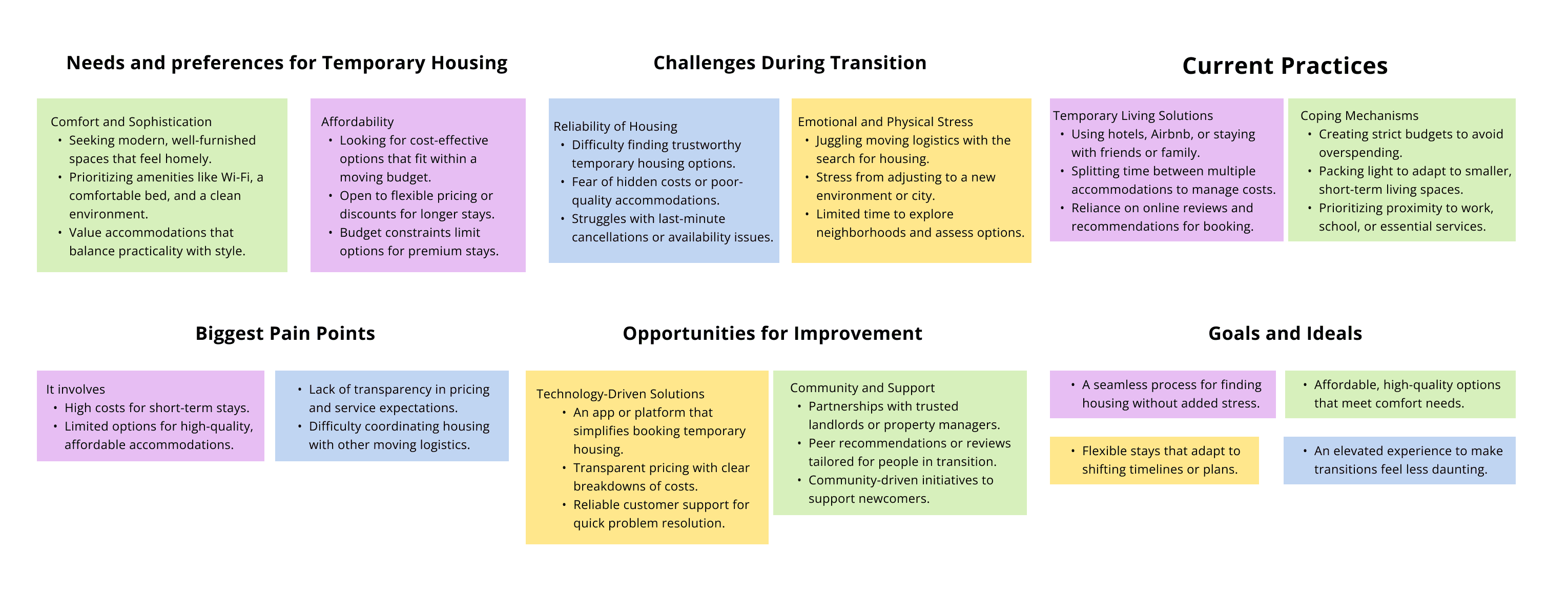
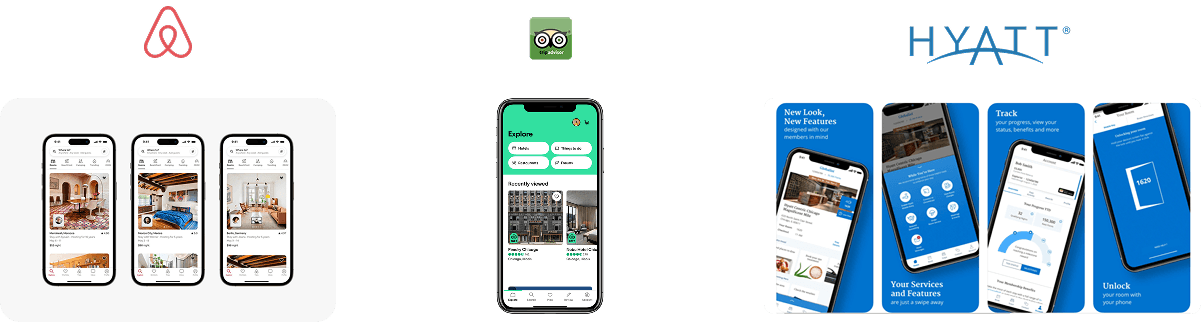
Conducted interviews and sent out a survey to gather insights mainly from college students on their experiences and preferences regarding temporary accommodations, the factors influencing their decisions during a transition, and their goals for managing housing and expenses.
Primary Research/ Understanding the problem:
Conducted interviews and sent out a survey to gather insights mainly from college students on their experiences and preferences regarding temporary accommodations, the factors influencing their decisions during a transition, and their goals for managing housing and expenses.
Key Insights
Key Insights
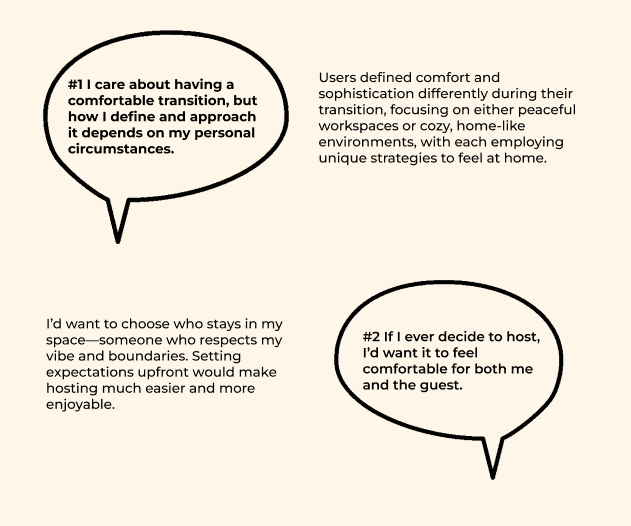
The research revealed patterns that guided the direction of my work.
From this I concluded...
that users seek comfort through personalization and clear communication, valuing control over their environment and expectations.
Ultimately, it’s all about this: “If we vibe, we a tribe!”
The research revealed patterns that guided the direction of my work.
From this I concluded...
that users seek comfort through personalization and clear communication, valuing control over their environment and expectations.
Ultimately, it’s all about this: “If we vibe, we a tribe!”
Sketching Wireframes
Sketching Wireframes
After gathering insights, I sketched wireframes to visualize the app's structure and the user flow, focusing on creating a user-friendly experience that aligns with the needs and goals identified during the research phase.
After gathering insights, I sketched wireframes to visualize the app's structure and the user flow, focusing on creating a user-friendly experience that aligns with the needs and goals identified during the research phase.
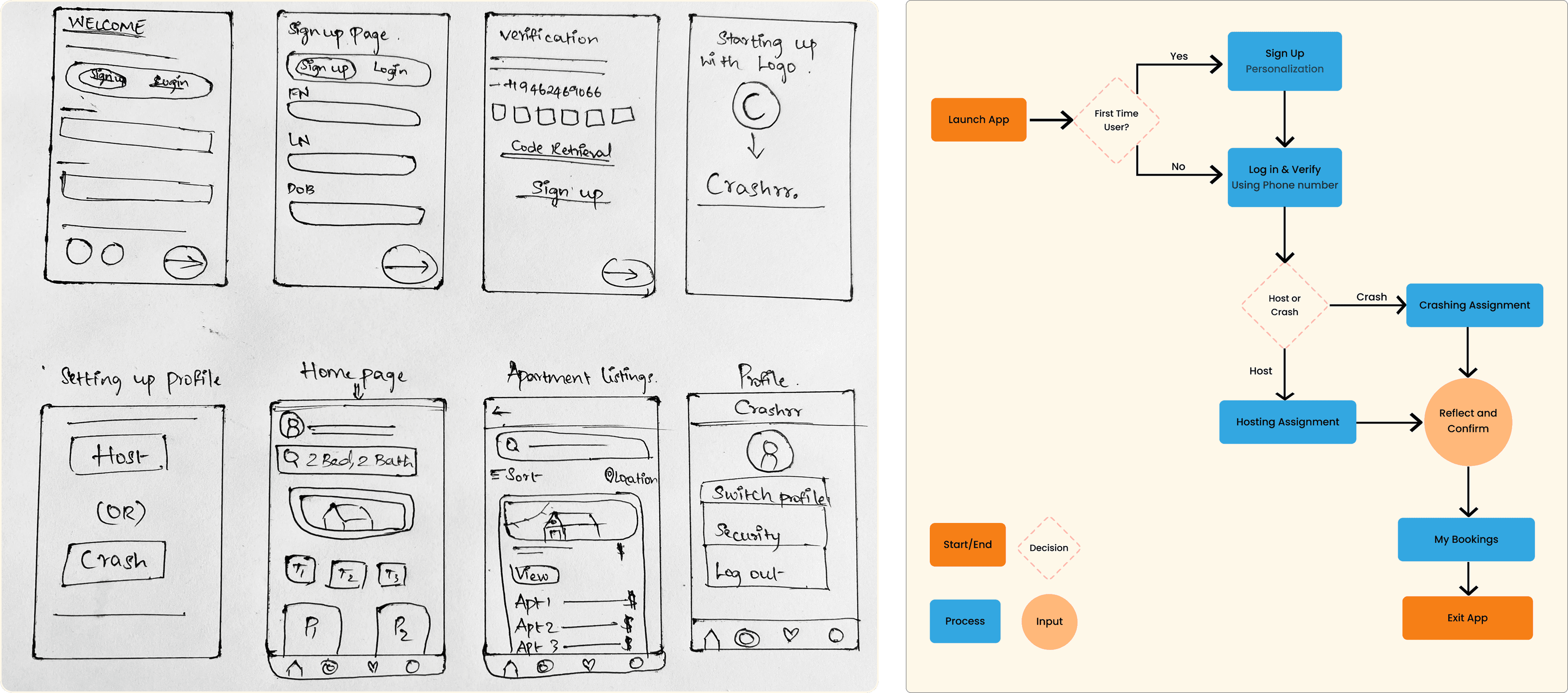
The user journey map outlines the first-time user’s flow, guiding them through a personalization process, allowing them to choose between hosting or crashing, and helping them complete their first booking.
The user journey map outlines the first-time user’s flow, guiding them through a personalization process, allowing them to choose between hosting or crashing, and helping them complete their first booking.
Creating the Brand Identity
Creating the Brand Identity
Visual Design System:
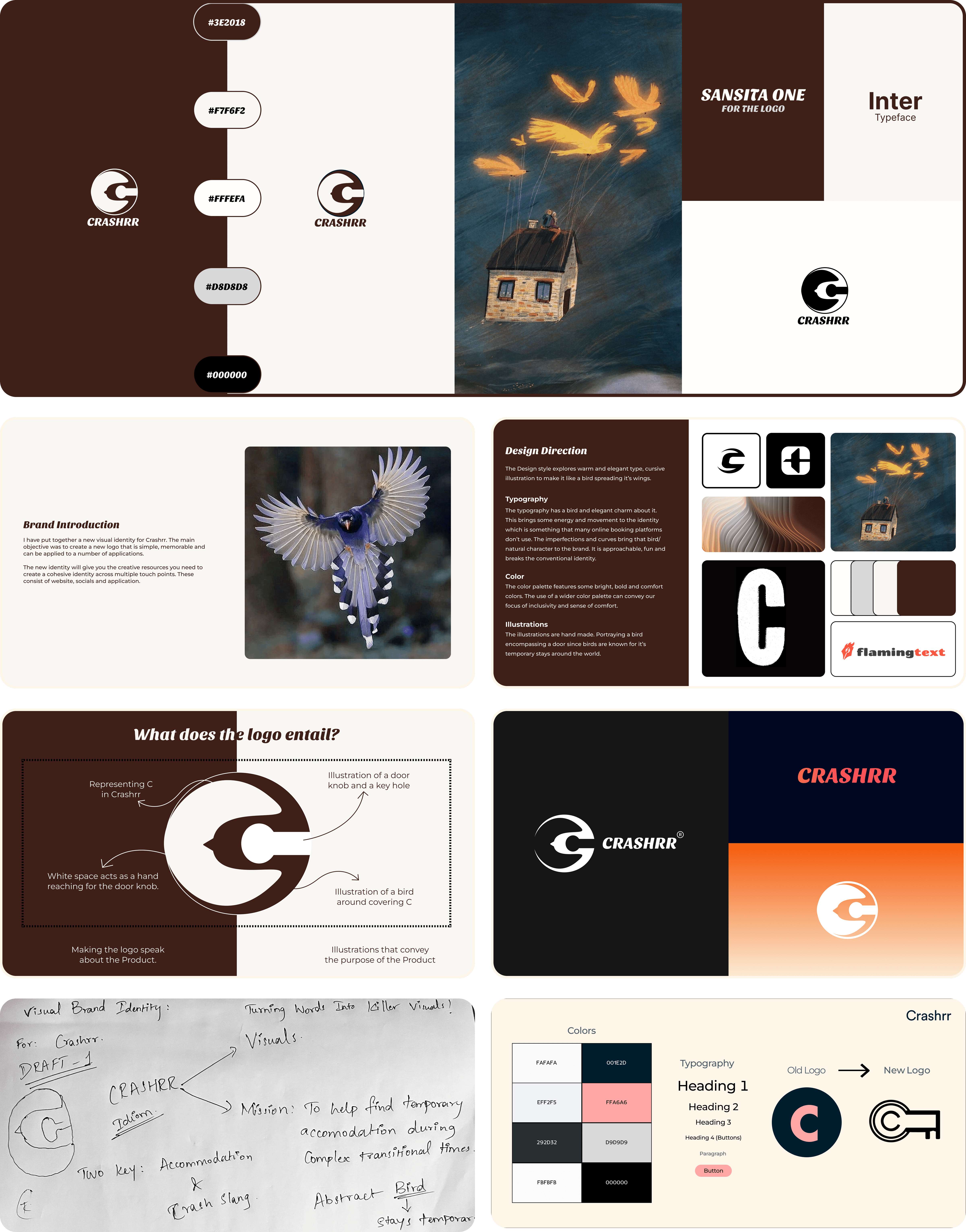
Drawing inspiration from warm, welcoming tones and modern, minimalist design, I crafted an experience that signals ease and sophistication during transitional moments. The copy language is clear, approachable, and emphasizes control and personalization, making users feel at home when they interact with Crashrr.
Visual Design System:
Drawing inspiration from warm, welcoming tones and modern, minimalist design, I crafted an experience that signals ease and sophistication during transitional moments. The copy language is clear, approachable, and emphasizes control and personalization, making users feel at home when they interact with Crashrr.
Notable explorations in Design:
Notable explorations in Design:
Among the many iterations, there are two key explorations I’d like to highlight.
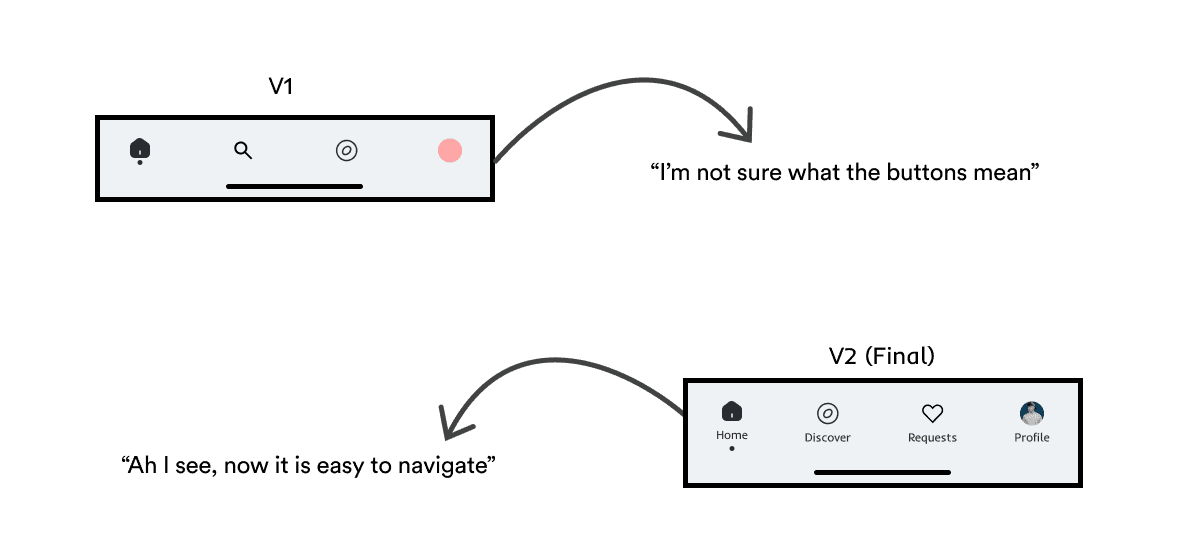
Which features should be included in the navigation bar?
To create an intuitive and cohesive user flow, I tested several approaches to make the navigation simple and clear.
Among the many iterations, there are two key explorations I’d like to highlight.
Which features should be included in the navigation bar?
To create an intuitive and cohesive user flow, I tested several approaches to make the navigation simple and clear.
How can I design something visually appealing without it becoming too cluttered?
By using a clean layout, a limited color palette, and plenty of white space. Focusing on key elements that highlight the core experience, ensuring the design remains simple, functional, and easy to navigate.
How can I design something visually appealing without it becoming too cluttered?
By using a clean layout, a limited color palette, and plenty of white space. Focusing on key elements that highlight the core experience, ensuring the design remains simple, functional, and easy to navigate.
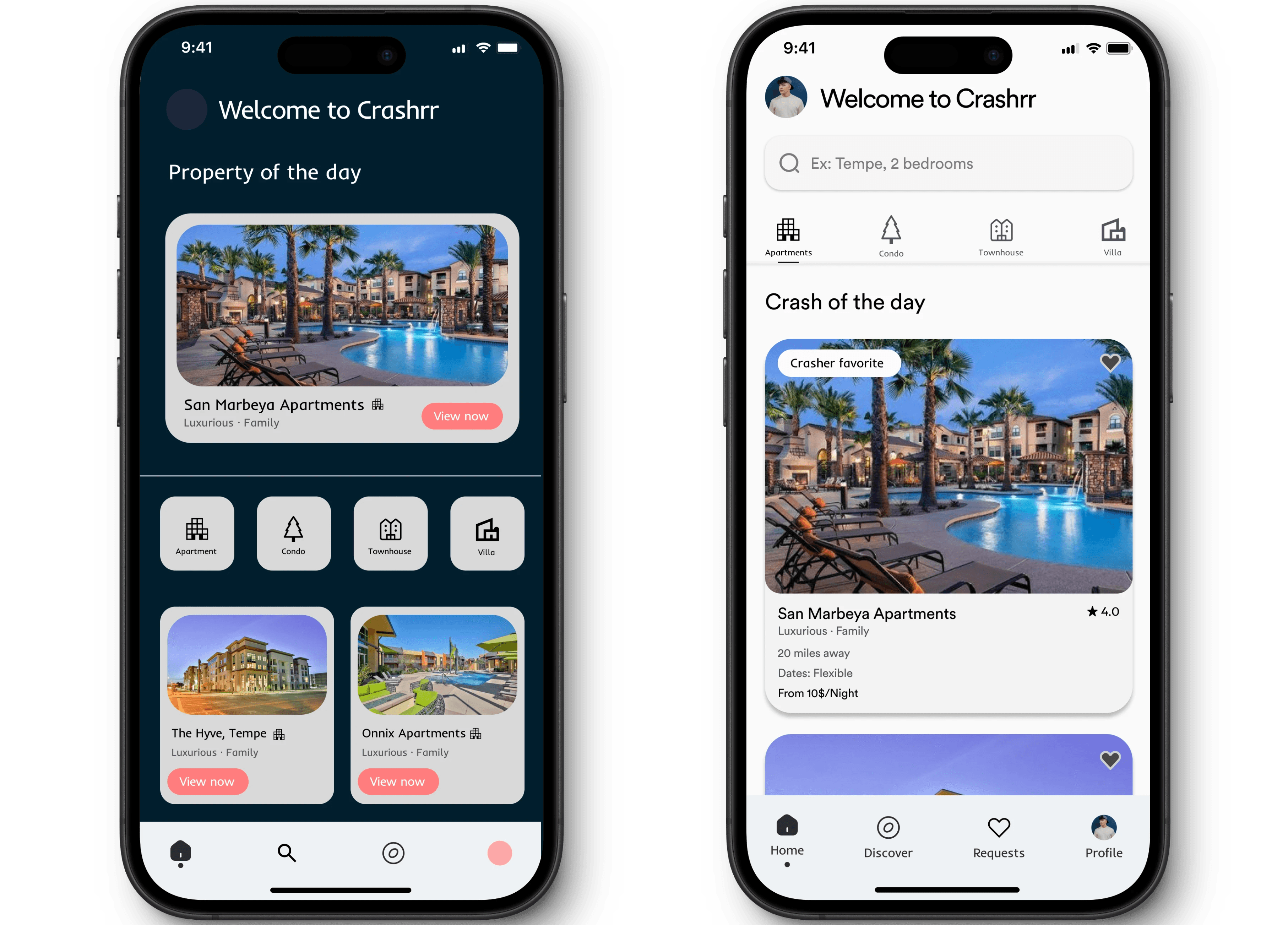
Before
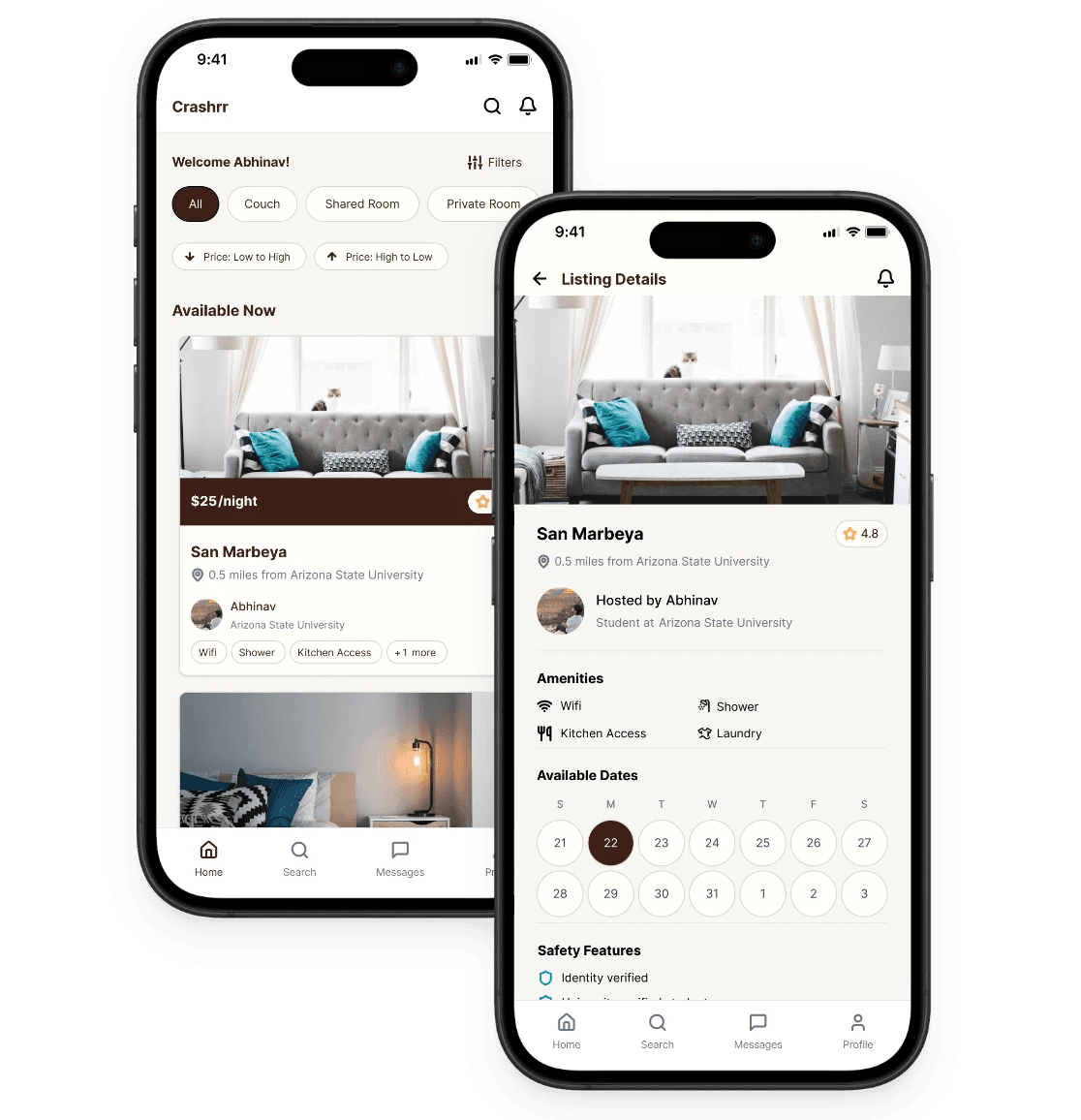
After
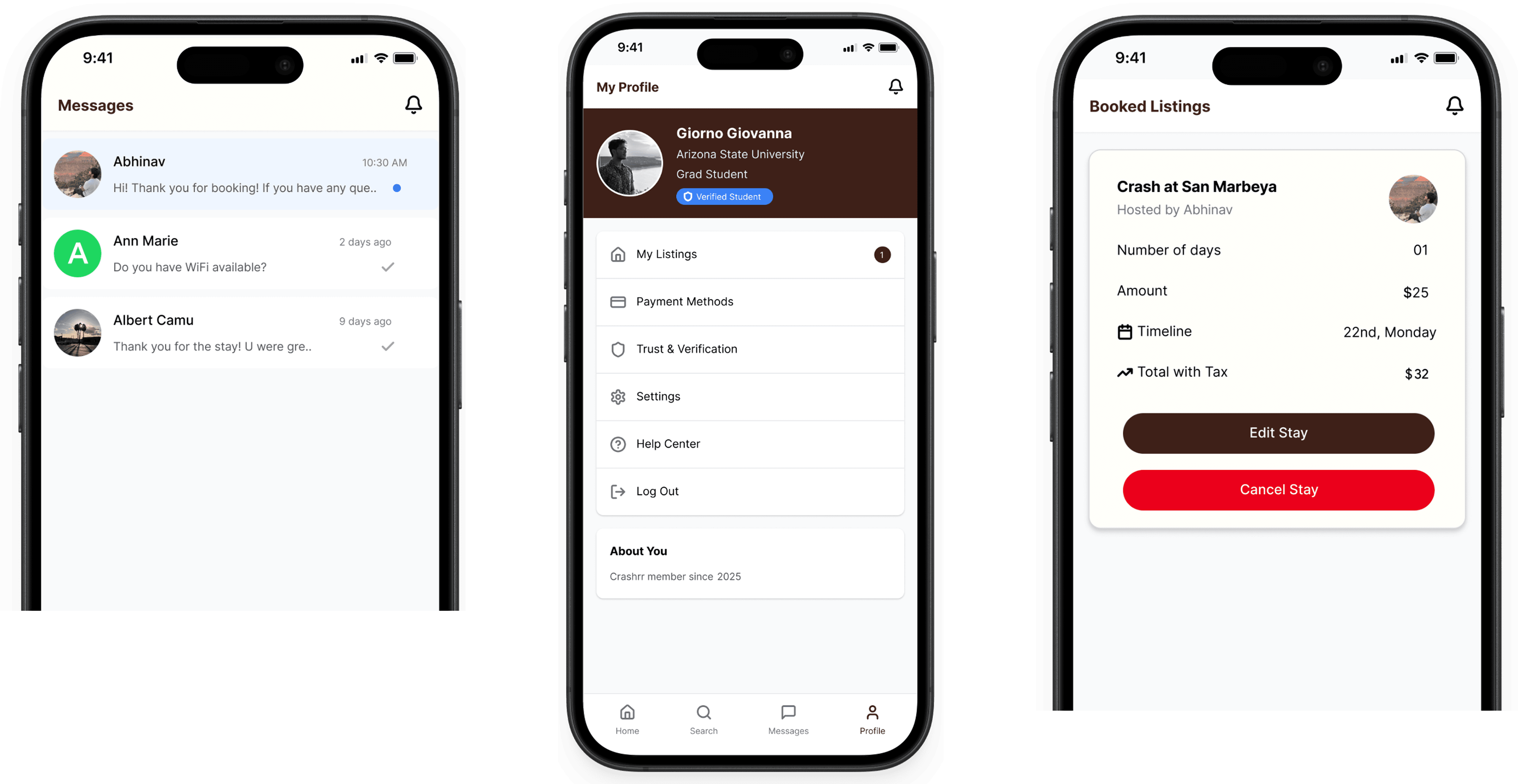
Learnings and future plans
Learnings and future plans
The Timeline:
I started working on Crashrr in August 2024 as a Product Designer. The initial phase focused on market research, user insights, and refining the product’s concept, visuals, and usability.
Here are the key milestones:
Conducted market research and gathered user insights.
Refined the product’s concept, visuals, and usability.
Focused on the initial design and user interaction.
Moving forward with adding more filters for easier selection of crashers and hosts.
After gathering key feedback, we’re now heading in a more refined direction.
What's Next:
I will continue enhancing personalization, especially around selecting the ideal crasher and host. I’m excited to see how these updates evolve the user experience.
The Timeline:
I started working on Crashrr in August 2024 as a Product Designer. The initial phase focused on market research, user insights, and refining the product’s concept, visuals, and usability.
Here are the key milestones:
Conducted market research and gathered user insights.
Refined the product’s concept, visuals, and usability.
Focused on the initial design and user interaction.
Moving forward with adding more filters for easier selection of crashers and hosts.
After gathering key feedback, we’re now heading in a more refined direction.
What's Next is I will continue enhancing personalization, especially around selecting the ideal crasher and host. I’m excited to see how these updates evolve the user experience.
Designed accessible short-term housing for smoother transitions
Designed accessible short-term housing for smoother transitions
This MVP platform supports users relocating to new places by helping them find reliable short-term stays. I focused on crafting an inclusive, user-friendly experience that builds trust and eases the stress of temporary housing.
Boosted user approvals and engagement by 30% through reimagined onboarding and search flows.
Increased task completion by 25% via usability testing and user feedback.
Aligned design decisions with business goals for better activation and growth.
This MVP platform supports users relocating to new places by helping them find reliable short-term stays. I focused on crafting an inclusive, user-friendly experience that builds trust and eases the stress of temporary housing.
Boosted user approvals and engagement by 30% through reimagined onboarding and search flows.
Increased task completion by 25% via usability testing and user feedback.
Aligned design decisions with business goals for better activation and growth.
ROLE
ROLE
Product Designer (Freelance)
Product Designer (Freelance)
Client
Client
Crashrr
Crashrr
Industry
Industry
Real Estate Tech
Real Estate Tech
Duration
Duration
Aug 2024 - Jan 2025
Aug 2024 - Jan 2025
GOAL
GOAL
Help users quickly find safe, short-term accommodations during emergency situations with minimal cognitive load and decision-making friction.
Help users quickly find safe, short-term accommodations during emergency situations with minimal cognitive load and decision-making friction.
Crashrr was designed to support people displaced by unexpected events by providing a fast, reliable way to discover temporary housing. The goal was to prioritize speed, clarity, and trust in moments of stress, enabling users to secure shelter without navigating complex booking flows.
Crashrr was designed to support people displaced by unexpected events by providing a fast, reliable way to discover temporary housing. The goal was to prioritize speed, clarity, and trust in moments of stress, enabling users to secure shelter without navigating complex booking flows.
RESPONSIBILITIES
RESPONSIBILITIES
User Research, Problem Framing, Wireframing, Interaction Design, Visual Design, Prototyping, Usability Testing, MVP Design for Validation
User Research, Problem Framing, Wireframing, Interaction Design, Visual Design, Prototyping, Usability Testing, MVP Design for Validation
Background Information
Background Information
The rise of temporary housing needs:
Extensive research highlights the need for innovative solutions to ease the financial and emotional burdens of these periods, while also showcasing the growing market potential for flexible and sophisticated accommodations. The diagram below outlines key insights supporting this demand.
The rise of temporary housing needs:
Extensive research highlights the need for innovative solutions to ease the financial and emotional burdens of these periods, while also showcasing the growing market potential for flexible and sophisticated accommodations. The diagram below outlines key insights supporting this demand.
My Biggest Questions
My Biggest Questions
HOW SHOULD I…
make hosting and staying in temporary accommodations more comfortable and personalized?
give users greater control over their transitional spaces?
HOW SHOULD I…
make hosting and staying in temporary accommodations more comfortable and personalized?
give users greater control over their transitional spaces?
Key Results
Key Results
Streamlined Onboarding
Streamlined Onboarding
Reduced time required for new users to find and book accommodations through an intuitive, guided onboarding process.
Reduced time required for new users to find and book accommodations through an intuitive, guided onboarding process.
Improved User Trust
Improved User Trust
Enhanced verification systems and profile transparency, leading to increased user confidence and higher engagement rates.
Enhanced verification systems and profile transparency, leading to increased user confidence and higher engagement rates.
Increased Platform Adoption
Increased Platform Adoption
Iterative updates based on user feedback contributed to higher engagement rates and growing user participation.
Iterative updates based on user feedback contributed to higher engagement rates and growing user participation.
Enhanced Booking Experience
Enhanced Booking Experience
Simplified the booking and confirmation process, aiming for a minimalistic approach
Simplified the booking and confirmation process, aiming for a minimalistic approach
Objectives
Objectives
Trust & Compatibility
Trust & Compatibility
Ensure hosts and crashers find suitable matches through clear profiles, verification processes, and communication tools.
Ensure hosts and crashers find suitable matches through clear profiles, verification processes, and communication tools.
Seamless Navigation
Seamless Navigation
Design an intuitive user journey that makes searching, booking, and hosting effortless, reducing friction in the decision-making process.
Design an intuitive user journey that makes searching, booking, and hosting effortless, reducing friction in the decision-making process.
Personalization
Personalization
Implement smart filters and preference-based recommendations to match users with the most compatible temporary stays.
Implement smart filters and preference-based recommendations to match users with the most compatible temporary stays.
Increased Platform Adoption
Increased Platform Adoption
Offer cost-effective, flexible accommodation solutions that cater to a diverse range of users with different budgets and needs.
Offer cost-effective, flexible accommodation solutions that cater to a diverse range of users with different budgets and needs.
Enhanced Booking Experience
Enhanced Booking Experience
Continuously enhance user experience through data-driven updates, incorporating feedback to refine Crashrr’s features and usability.
Continuously enhance user experience through data-driven updates, incorporating feedback to refine Crashrr’s features and usability.
Strategic Prioritization
Strategic Prioritization
Primary Research/ Understanding the problem:
Conducted interviews and sent out a survey to gather insights mainly from college students on their experiences and preferences regarding temporary accommodations, the factors influencing their decisions during a transition, and their goals for managing housing and expenses.
Primary Research/ Understanding the problem:
Conducted interviews and sent out a survey to gather insights mainly from college students on their experiences and preferences regarding temporary accommodations, the factors influencing their decisions during a transition, and their goals for managing housing and expenses.
Key Insights
Key Insights
The research revealed patterns that guided the direction of my work.
From this I concluded...
that users seek comfort through personalization and clear communication, valuing control over their environment and expectations.
Ultimately, it’s all about this: “If we vibe, we a tribe!”
The research revealed patterns that guided the direction of my work.
From this I concluded...
that users seek comfort through personalization and clear communication, valuing control over their environment and expectations.
Ultimately, it’s all about this: “If we vibe, we a tribe!”
Sketching Wireframes
Sketching Wireframes
After gathering insights, I sketched wireframes to visualize the app's structure and the user flow, focusing on creating a user-friendly experience that aligns with the needs and goals identified during the research phase.
After gathering insights, I sketched wireframes to visualize the app's structure and the user flow, focusing on creating a user-friendly experience that aligns with the needs and goals identified during the research phase.
The user journey map outlines the first-time user’s flow, guiding them through a personalization process, allowing them to choose between hosting or crashing, and helping them complete their first booking.
The user journey map outlines the first-time user’s flow, guiding them through a personalization process, allowing them to choose between hosting or crashing, and helping them complete their first booking.
Creating the Brand Identity
Creating the Brand Identity
Visual Design System:
Drawing inspiration from warm, welcoming tones and modern, minimalist design, I crafted an experience that signals ease and sophistication during transitional moments. The copy language is clear, approachable, and emphasizes control and personalization, making users feel at home when they interact with Crashrr.
Visual Design System:
Drawing inspiration from warm, welcoming tones and modern, minimalist design, I crafted an experience that signals ease and sophistication during transitional moments. The copy language is clear, approachable, and emphasizes control and personalization, making users feel at home when they interact with Crashrr.
Notable explorations in Design:
Notable explorations in Design:
Among the many iterations, there are two key explorations I’d like to highlight.
Which features should be included in the navigation bar?
To create an intuitive and cohesive user flow, I tested several approaches to make the navigation simple and clear.
Among the many iterations, there are two key explorations I’d like to highlight.
Which features should be included in the navigation bar?
To create an intuitive and cohesive user flow, I tested several approaches to make the navigation simple and clear.
How can I design something visually appealing without it becoming too cluttered?
By using a clean layout, a limited color palette, and plenty of white space. Focusing on key elements that highlight the core experience, ensuring the design remains simple, functional, and easy to navigate.
How can I design something visually appealing without it becoming too cluttered?
By using a clean layout, a limited color palette, and plenty of white space. Focusing on key elements that highlight the core experience, ensuring the design remains simple, functional, and easy to navigate.
Before
After
Learnings and future plans
Learnings and future plans
The Timeline:
I started working on Crashrr in August 2024 as a Product Designer. The initial phase focused on market research, user insights, and refining the product’s concept, visuals, and usability.
Here are the key milestones:
Conducted market research and gathered user insights.
Refined the product’s concept, visuals, and usability.
Focused on the initial design and user interaction.
Moving forward with adding more filters for easier selection of crashers and hosts.
After gathering key feedback, we’re now heading in a more refined direction.
What's Next:
I will continue enhancing personalization, especially around selecting the ideal crasher and host. I’m excited to see how these updates evolve the user experience.
The Timeline:
I started working on Crashrr in August 2024 as a Product Designer. The initial phase focused on market research, user insights, and refining the product’s concept, visuals, and usability.
Here are the key milestones:
Conducted market research and gathered user insights.
Refined the product’s concept, visuals, and usability.
Focused on the initial design and user interaction.
Moving forward with adding more filters for easier selection of crashers and hosts.
After gathering key feedback, we’re now heading in a more refined direction.
What's Next is I will continue enhancing personalization, especially around selecting the ideal crasher and host. I’m excited to see how these updates evolve the user experience.
Designed accessible short-term housing for smoother transitions
Designed accessible short-term housing for smoother transitions
This MVP platform supports users relocating to new places by helping them find reliable short-term stays. I focused on crafting an inclusive, user-friendly experience that builds trust and eases the stress of temporary housing.
Boosted user approvals and engagement by 30% through reimagined onboarding and search flows.
Increased task completion by 25% via usability testing and user feedback.
Aligned design decisions with business goals for better activation and growth.
This MVP platform supports users relocating to new places by helping them find reliable short-term stays. I focused on crafting an inclusive, user-friendly experience that builds trust and eases the stress of temporary housing.
Boosted user approvals and engagement by 30% through reimagined onboarding and search flows.
Increased task completion by 25% via usability testing and user feedback.
Aligned design decisions with business goals for better activation and growth.
ROLE
ROLE
Product Designer (Freelance)
Product Designer (Freelance)
Client
Client
Crashrr
Crashrr
Industry
Industry
Real Estate Tech
Real Estate Tech
Duration
Duration
Aug 2024 - Jan 2025
Aug 2024 - Jan 2025
GOAL
GOAL
Help users quickly find safe, short-term accommodations during emergency situations with minimal cognitive load and decision-making friction.
Help users quickly find safe, short-term accommodations during emergency situations with minimal cognitive load and decision-making friction.
Crashrr was designed to support people displaced by unexpected events by providing a fast, reliable way to discover temporary housing. The goal was to prioritize speed, clarity, and trust in moments of stress, enabling users to secure shelter without navigating complex booking flows.
Crashrr was designed to support people displaced by unexpected events by providing a fast, reliable way to discover temporary housing. The goal was to prioritize speed, clarity, and trust in moments of stress, enabling users to secure shelter without navigating complex booking flows.
RESPONSIBILITIES
RESPONSIBILITIES
User Research, Problem Framing, Wireframing, Interaction Design, Visual Design, Prototyping, Usability Testing, MVP Design for Validation
User Research, Problem Framing, Wireframing, Interaction Design, Visual Design, Prototyping, Usability Testing, MVP Design for Validation
Background Information
Background Information
The rise of temporary housing needs:
Extensive research highlights the need for innovative solutions to ease the financial and emotional burdens of these periods, while also showcasing the growing market potential for flexible and sophisticated accommodations. The diagram below outlines key insights supporting this demand.
The rise of temporary housing needs:
Extensive research highlights the need for innovative solutions to ease the financial and emotional burdens of these periods, while also showcasing the growing market potential for flexible and sophisticated accommodations. The diagram below outlines key insights supporting this demand.
My Biggest Questions
My Biggest Questions
HOW SHOULD I…
make hosting and staying in temporary accommodations more comfortable and personalized?
give users greater control over their transitional spaces?
HOW SHOULD I…
make hosting and staying in temporary accommodations more comfortable and personalized?
give users greater control over their transitional spaces?
Key Results
Key Results
Streamlined Onboarding
Streamlined Onboarding
Reduced time required for new users to find and book accommodations through an intuitive, guided onboarding process.
Reduced time required for new users to find and book accommodations through an intuitive, guided onboarding process.
Improved User Trust
Improved User Trust
Enhanced verification systems and profile transparency, leading to increased user confidence and higher engagement rates.
Enhanced verification systems and profile transparency, leading to increased user confidence and higher engagement rates.
Increased Platform Adoption
Increased Platform Adoption
Iterative updates based on user feedback contributed to higher engagement rates and growing user participation.
Iterative updates based on user feedback contributed to higher engagement rates and growing user participation.
Enhanced Booking Experience
Enhanced Booking Experience
Simplified the booking and confirmation process, aiming for a minimalistic approach
Simplified the booking and confirmation process, aiming for a minimalistic approach
Objectives
Objectives
Trust & Compatibility
Trust & Compatibility
Ensure hosts and crashers find suitable matches through clear profiles, verification processes, and communication tools.
Ensure hosts and crashers find suitable matches through clear profiles, verification processes, and communication tools.
Seamless Navigation
Seamless Navigation
Design an intuitive user journey that makes searching, booking, and hosting effortless, reducing friction in the decision-making process.
Design an intuitive user journey that makes searching, booking, and hosting effortless, reducing friction in the decision-making process.
Personalization
Personalization
Implement smart filters and preference-based recommendations to match users with the most compatible temporary stays.
Implement smart filters and preference-based recommendations to match users with the most compatible temporary stays.
Increased Platform Adoption
Increased Platform Adoption
Offer cost-effective, flexible accommodation solutions that cater to a diverse range of users with different budgets and needs.
Offer cost-effective, flexible accommodation solutions that cater to a diverse range of users with different budgets and needs.
Enhanced Booking Experience
Enhanced Booking Experience
Continuously enhance user experience through data-driven updates, incorporating feedback to refine Crashrr’s features and usability.
Continuously enhance user experience through data-driven updates, incorporating feedback to refine Crashrr’s features and usability.
Strategic Prioritization
Strategic Prioritization
Primary Research/ Understanding the problem:
Conducted interviews and sent out a survey to gather insights mainly from college students on their experiences and preferences regarding temporary accommodations, the factors influencing their decisions during a transition, and their goals for managing housing and expenses.
Primary Research/ Understanding the problem:
Conducted interviews and sent out a survey to gather insights mainly from college students on their experiences and preferences regarding temporary accommodations, the factors influencing their decisions during a transition, and their goals for managing housing and expenses.
Key Insights
Key Insights
The research revealed patterns that guided the direction of my work.
From this I concluded...
that users seek comfort through personalization and clear communication, valuing control over their environment and expectations.
Ultimately, it’s all about this: “If we vibe, we a tribe!”
The research revealed patterns that guided the direction of my work.
From this I concluded...
that users seek comfort through personalization and clear communication, valuing control over their environment and expectations.
Ultimately, it’s all about this: “If we vibe, we a tribe!”
Sketching Wireframes
Sketching Wireframes
After gathering insights, I sketched wireframes to visualize the app's structure and the user flow, focusing on creating a user-friendly experience that aligns with the needs and goals identified during the research phase.
After gathering insights, I sketched wireframes to visualize the app's structure and the user flow, focusing on creating a user-friendly experience that aligns with the needs and goals identified during the research phase.
The user journey map outlines the first-time user’s flow, guiding them through a personalization process, allowing them to choose between hosting or crashing, and helping them complete their first booking.
The user journey map outlines the first-time user’s flow, guiding them through a personalization process, allowing them to choose between hosting or crashing, and helping them complete their first booking.
Creating the Brand Identity
Creating the Brand Identity
Visual Design System:
Drawing inspiration from warm, welcoming tones and modern, minimalist design, I crafted an experience that signals ease and sophistication during transitional moments. The copy language is clear, approachable, and emphasizes control and personalization, making users feel at home when they interact with Crashrr.
Visual Design System:
Drawing inspiration from warm, welcoming tones and modern, minimalist design, I crafted an experience that signals ease and sophistication during transitional moments. The copy language is clear, approachable, and emphasizes control and personalization, making users feel at home when they interact with Crashrr.
Notable explorations in Design:
Notable explorations in Design:
Among the many iterations, there are two key explorations I’d like to highlight.
Which features should be included in the navigation bar?
To create an intuitive and cohesive user flow, I tested several approaches to make the navigation simple and clear.
Among the many iterations, there are two key explorations I’d like to highlight.
Which features should be included in the navigation bar?
To create an intuitive and cohesive user flow, I tested several approaches to make the navigation simple and clear.
How can I design something visually appealing without it becoming too cluttered?
By using a clean layout, a limited color palette, and plenty of white space. Focusing on key elements that highlight the core experience, ensuring the design remains simple, functional, and easy to navigate.
How can I design something visually appealing without it becoming too cluttered?
By using a clean layout, a limited color palette, and plenty of white space. Focusing on key elements that highlight the core experience, ensuring the design remains simple, functional, and easy to navigate.
Before
After
Learnings and future plans
Learnings and future plans
The Timeline:
I started working on Crashrr in August 2024 as a Product Designer. The initial phase focused on market research, user insights, and refining the product’s concept, visuals, and usability.
Here are the key milestones:
Conducted market research and gathered user insights.
Refined the product’s concept, visuals, and usability.
Focused on the initial design and user interaction.
Moving forward with adding more filters for easier selection of crashers and hosts.
After gathering key feedback, we’re now heading in a more refined direction.
What's Next:
I will continue enhancing personalization, especially around selecting the ideal crasher and host. I’m excited to see how these updates evolve the user experience.
The Timeline:
I started working on Crashrr in August 2024 as a Product Designer. The initial phase focused on market research, user insights, and refining the product’s concept, visuals, and usability.
Here are the key milestones:
Conducted market research and gathered user insights.
Refined the product’s concept, visuals, and usability.
Focused on the initial design and user interaction.
Moving forward with adding more filters for easier selection of crashers and hosts.
After gathering key feedback, we’re now heading in a more refined direction.
What's Next is I will continue enhancing personalization, especially around selecting the ideal crasher and host. I’m excited to see how these updates evolve the user experience.